



There’s a question I’ve been asked more times than you might think: “How much would it cost to have your artist perform just one song?”
The answer may surprise you.
We don’t charge by the song. And even when a venue or event can only accommodate one song for whatever reason, the fee generally remains the same. Why? Because what you’re really booking isn’t just the few minutes an artist spends on stage. There’s an entire operation behind that performance, and a lot of it happens long before the music ever starts. And that brings me to one of the most misunderstood parts of what I do: the road.
From the outside, traveling around the country with Freestyle artists might sound glamorous. Planes, hotels, arenas, backstage passes, packed crowds, it certainly can look exciting, and it is for the most part. But when you’re doing it week after week, the reality is a little different. The airports, the long flights, the late nights, the early mornings, the constant logistics and the sheer physical toll of being on the move can really wear you down. So, in this issue, I figured I’d take you along, and hopefully you can get a better idea of what it’s all about.
I’ll give you a behind-the-scenes look at one of my trips and show you what it’s really like to travel with Freestyle artists. And since we’re already on the road, why not take you even further behind the curtain? I’ll walk you through what happens at one of these shows, from the moment we arrive to the preparation, backstage activity, and eventually making that walk through those enormous arena tunnels toward the stage.
There’s a lot more to these shows than what you see from the audience. So pack your bags, buckle up, let’s hit the road. All this and more in Issue #57 of The Freestyle Blast Newsletter.
😏👉 Oh, and one more thing. The Freestyle Blast Newsletter will always be free. We don’t ask for donations, contributions, or tips. Instead, we ask for something even more valuable... your engagement.
Every Like, Heart, Comment, and Share helps us reach more Freestyle fans, grow this incredible community, and just as importantly, lets us know that the time and effort we pour into every issue truly matter.
Thank you for being part of this journey and for helping us keep the music as well as the memories alive.



GETTING READY FOR THE ROAD
Being on the road isn’t always what it’s cracked up to be. It can certainly put some wear and tear on your body, but honestly…
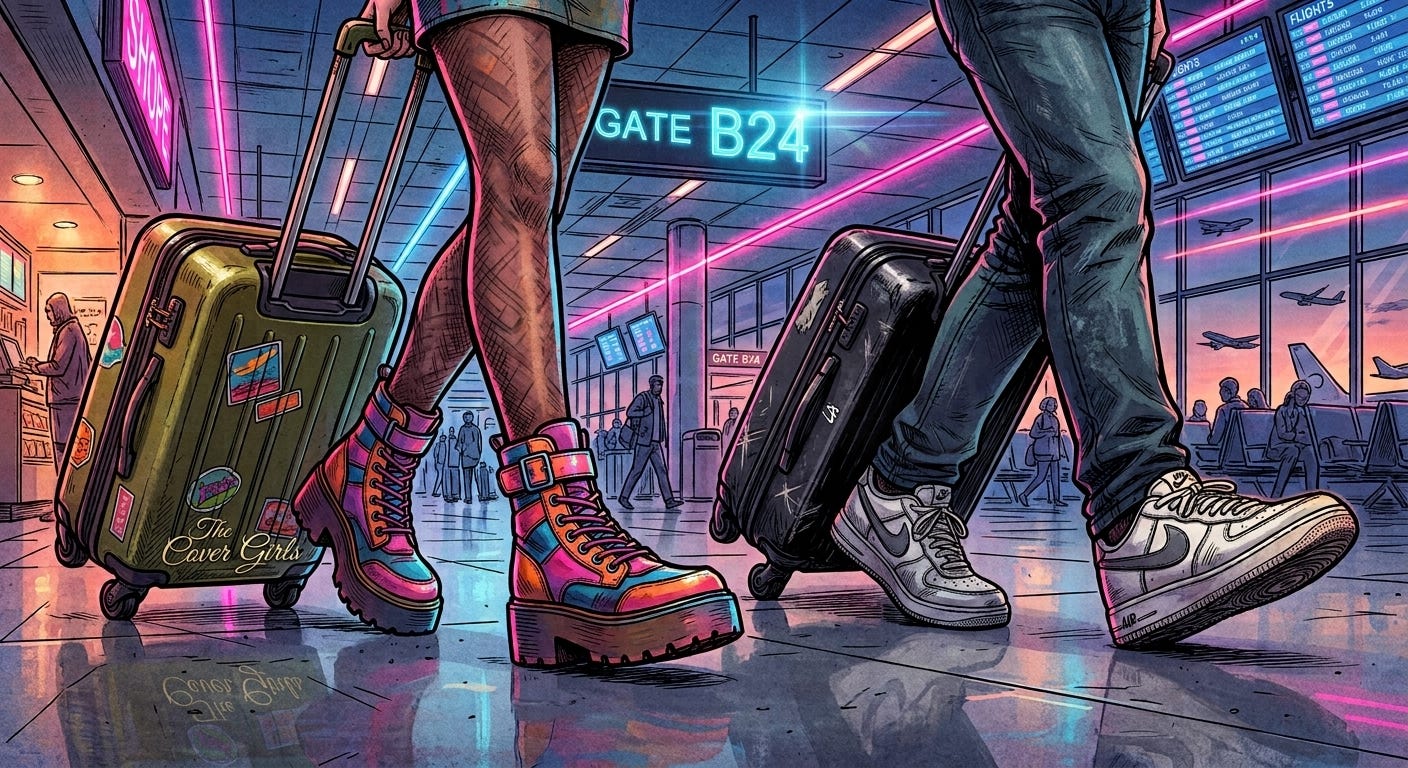
I wouldn’t change it for the world!
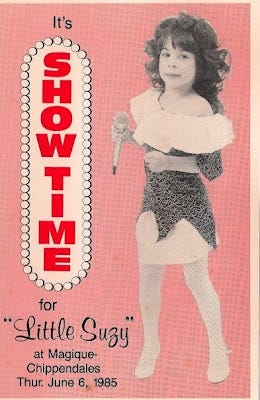
I’ve been traveling for shows for more than 30 years now. In fact, my very first fly-away show was to Dallas, Texas, with Lil’ Suzy.
Before that, I had already done plenty of tri-state events, mostly clubs, and even those were incredibly exciting to me. But I can still remember the butterflies I had the night before that first fly-away. I could barely sleep. I was just so excited.
Think about it. I was a poor kid from the hood who had already experienced the crazy thrill of having beautiful white stretch limousines pull up to my building. That alone felt like something out of a movie.
But flying to another state for a show? That was on a whole different level. Someone was actually willing to buy me an expensive plane ticket, put me in a hotel, and send me to another state to accompany an artist. To me, that was a BIG deal. And of all places… Dallas, Texas?
Seriously. If it weren’t for the show we were doing, would I have ever traveled to Dallas? Probably not. And that first trip opened the door to so many more. Texas, California, Illinois, Michigan, New Mexico, Arizona… and that’s just naming the states. There are countless cities I’ve traveled to over the years, many of which I still visit today.
But here’s something people probably don’t think about: What does it actually take to travel for one of these shows? Is it like traveling for vacation? Honestly… no!
For our typical weekend shows, we’re usually talking about an overnight trip, maybe two nights if necessary. We fly in, do the show, and fly right back home.
Tours are different. You might spend weeks on the road, moving from city to city. We used to do that back in the day, but that’s not really how we operate anymore. Nowadays, it’s pretty simple. Even those so-called tours are mostly weekend trips.
Fly in. Do the show. Fly home. Sounds easy, right? Well… that’s because I left out about 90 percent of what happens in between. And that’s where the real work begins.
Of course, my job as an agent starts long before we ever get on an airplane. And the artist’s job starts even earlier than that, because without the artist and those hits they recorded, there would be no reason for any of us to hit the road in the first place, so shout out to them!.
So the deal is done. The contract is signed. The deposit is in. Now comes the fun part: Getting everybody there.
Sometimes we negotiate what is called an “all-in” deal. That simply means the promoter pays us one lump sum, and out of that money, we cover the artist’s expenses, including flights, hotel, ground transportation and anything else required to get them to and from the show. But most of the time, the deal is fee plus expenses.
That means the promoter pays the artist’s performance fee, then handles the travel and accommodations themselves. And since that’s the more common arrangement, that’s where we’ll start.
As soon as the deal is locked in, I always advise the promoter to get started on the flights. Why? Because hotel rates can certainly change, but airline tickets are notorious for changing dramatically, sometimes overnight.
We’re talking about a flight to California going from $423 to $897 from one day to the next. And those numbers aren’t made up. That just happened to one of my promoters the other day.
But wait… Promoters can’t just jump online, grab whatever flight is cheapest and book the artist into any hotel they find. Not at all. The travel arrangements have to be approved by the artist and/or their management. And before anyone thinks this is about artists being spoiled or demanding luxury treatment, it really isn’t.
A lot of it comes down to safety, comfort and making sure the artist arrives ready to perform. Most acts aren’t requiring first-class or business-class seats anymore, unless we’re talking about international travel. But there are still some basic requirements that I consider non-negotiable, and as the agent, I’m going to enforce them.
First and foremost: Nonstop flights. That’s a must. Yes, a connecting flight might save the promoter a few dollars, but those savings can quickly disappear when you consider everything that can go wrong. Missed connections. Flight cancellations. Long delays. Lost luggage. And when that luggage contains an artist’s performance outfits, makeup, shoes and other show necessities, losing a bag isn’t just an inconvenience. It can become a serious problem.
So even if that nonstop flight costs a little more, I’m going to choose it every time. Because when you’re traveling for a show, the goal isn’t simply to get the artist from Point A to Point B.
The goal is to get them there safely, comfortably, on time, with everything they need to walk onto that stage and do what they came there to do. And believe me, that’s just the beginning of getting ready for the road.
Have you ever gone on the road with an artist, or another type of entertainment? What was your experience? Let us know in the comment section below.



💥 Freestyle’s Dreamgirl Cynthia opens up a Wellness Spa in Port Saint Luci, FL.
💥 C&C Music Factory files a Law Suite against artist, Freedom Williams.
💥 Freestyle artist, Judy Torres releases her Memoir titled, No Reason To Cry.
💥 JCee and Alida of Spanglish Ent, tie the knot. Congratulations Mr. & Mrs. Colon.


A PEEK BEHIND THE CURTAIN
What really goes on behind the scenes at those big Freestyle Concerts?
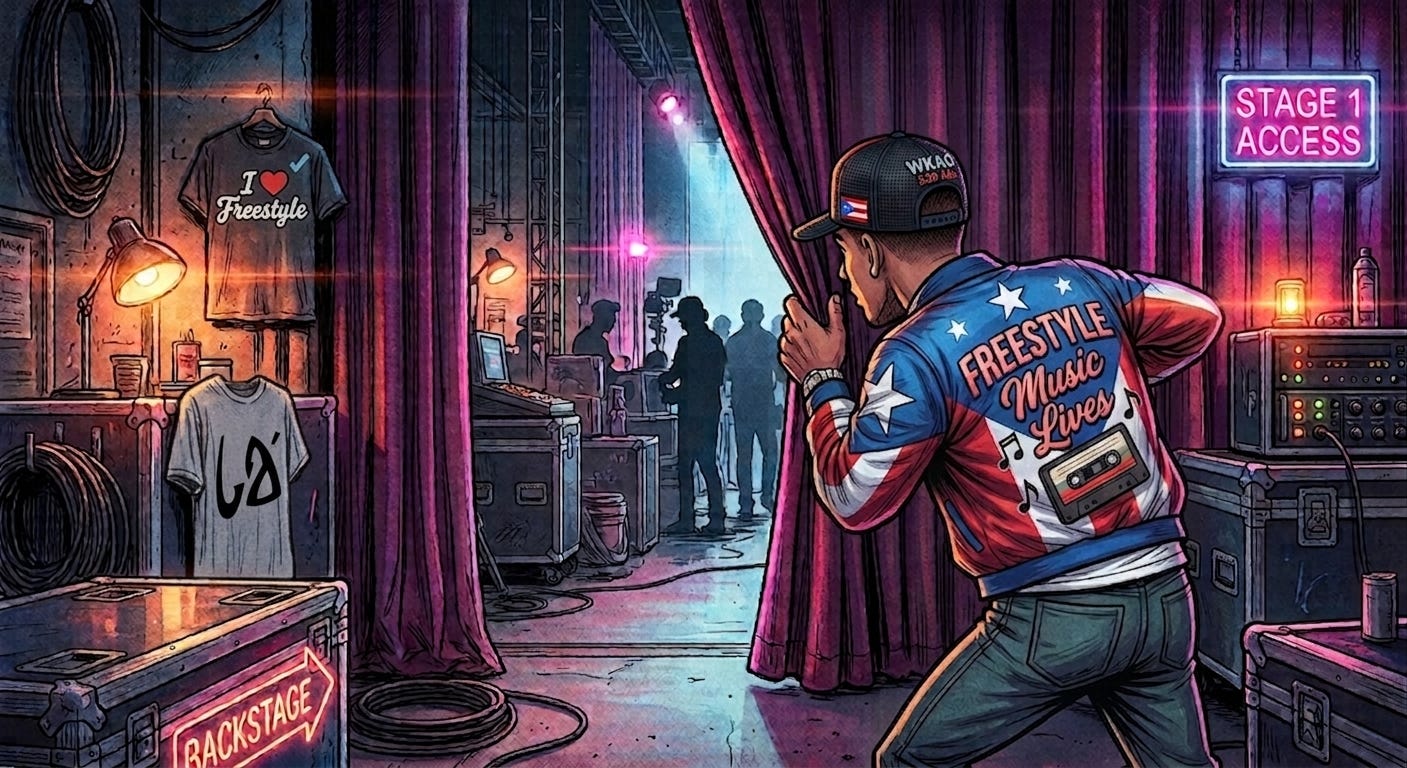
Keep reading, because I’m about to take you there.
As far back as I can remember, I wanted to be in the music business. I was fascinated by the entire machine that made a concert happen, and any opportunity to get a peek behind the scenes felt special.
It made me feel like I belonged there. And honestly, after thousands of backstage areas I’ve been blessed to walk through over the years, I still get that same warm, tingling feeling every time I step into one. The bigger Freestyle concerts especially.
I’ve had artists perform in some of the biggest arenas across the country, and even after all these years, those buildings still fascinate me. Unless you’ve actually been behind the curtain, you really have no idea just how massive these places can be. Let me give you an example.
A couple of days ago, as I write this, we performed at the Mortgage Matchup Center in Phoenix, Arizona. When I entered the back loading area for soundcheck, I looked way off in the corner and saw four 18-wheeler trucks parked side by side, with more than enough room for them to drive in and out. Four tractor-trailers. Inside an arena. The words really don’t do the visual justice.
And then there are the tunnels. I’ve gotten lost in these things more times than I care to admit because, well, they really are exactly what you would imagine. Tunnels.
Long corridors underneath and around the venue that connect loading docks, dressing rooms, backstage areas and the stage itself, and that’s where those security checkpoints come in.
At these larger events, security is stationed throughout the building. Of course, their primary job is keeping unauthorized people out, but they also become our landmarks. When you’re trying to navigate one of these massive venues, they’re often the people pointing you in the right direction.
It starts the moment you arrive. Security inspects the vehicle entering the loading area. They even walk around with those extended mirrors to make sure there are no stowaways or other dangers hiding underneath the vehicle.
Then you enter the building itself, where you go through another security checkpoint, complete with walk-through metal detectors and those conveyor-belt X-ray machines where your bags are screened. I’ve seen people complain about the process. Me? I get it. And I appreciate the extra precautions. When you have thousands of people in an arena, safety has to come first.
My first stop has to be at the production office. This is where you’ll find the producer / promoter. The tour or stage manager, and of course the person who will be settling the balance with you later on. Here is where I receive our credentials, you know, Those “All Access” lanyards you sometimes see dangling around peoples necks at concerts, or more popular these days are those Tyvek wristbands. You’ve seen those too, those super strong tear-proof wristbands used also to allow you to walk freely through every security checkpoint.
Once we make it through that first level of security, we usually encounter another checkpoint at the beginning of the dressing-room corridor. One of the first things we like to do when we arrive, assuming we still have some time before soundcheck, is find our dressing room, and from there, catering. Because after soundcheck, we’ll probably be hungry.
There’s something really cool about walking through those corridors when the building is still mostly empty. You pass one dressing room after another, each with a sign on the door telling you who it’s for. Stevie B. Lisa Lisa. TKA. Johnny O. Shannon and so many more, until finally, there it is... The Cover Girls.
I sometimes can’t help but wonder who else has occupied some of these rooms over the years. Rock stars. Athletes. Major performers from every genre. There’s history in those rooms. If walls could talk, huh?
These rooms are usually very nice, and comfortable. Most have carpeting, couches, chairs, tables covered with black or white tablecloths, plenty of snacks, a fridge stocked with all types of beverages, including whatever extra your rider might’ve requested.
Many of these dressing rooms also have their own private bathrooms, complete with showers, although we normally don’t use them. And then there are those huge television monitors mounted on the walls, where you can actually watch the concert in real-time.
Once we’ve gotten settled and familiar with where everything is, it’s time to find our way to the side of the stage. That’s where the artists need to be when it’s time to perform. And of course, there’s more security.
This is where you get that first look at what you are about to encounter at showtime. The difference now is that the seats are empty and the lights are all on, so you can literally see each and every seat out there, and it’s massive, and can be quite intimidating.
Backstage it’s all about the sound crew and stage manager. These are the folks that don’t only make you sound good to the audience, they make you sound good to yourself, and through your monitors. These are the folks that will be controlling the lights come showtime, so if there is a special request, now is the time to bring it up, and last but not least, our stage manager. This is the person who will have whatever it is you need on stage ready when it’s time for you to go on.
That relationship is incredibly important because once we walk onto that stage, we have to trust those professionals to do their jobs.
Most of these larger productions already have our music uploaded in their systems and cued come showtime, but I always carry a thumb drive with me anyway. Just in case. The first thing I want to make sure of is that our microphone stands are in the correct positions and at the right height. That’s especially important with The Cover Girls because their choreography involves a lot of interaction with the microphones. The timing of them moving toward, away, and criss-crossing those mics has to be precise.
This process is called striking. The sound crew places markings on the stage, usually with tape or chalk, showing exactly where the microphone stands need to be positioned. Angel opted out of using a mic stand many years ago, and instead prefers to have her microphone in her hand off stage, so we normally only require two stands onstage with microphones already attached and live.
Upon their introduction, my two Cover Girls make their way onto the stage and into position, at that point I cue the sound man or DJ to start the playback. And we’re off. Some artists use soundcheck as a full rehearsal, and I get it. Sort of. But when you have a bunch of acts waiting their turn, it’s important also to be considerate. Do your check. Make sure everything works. Then get the hell off the stage. That’s how I do things.
For The Cover Girls, we only do a small portion of our first song, “Because Of You.” For me, that’s the most important part. because if we can press play and the music comes through properly, and the mics are on, then we’re in good shape. Everything else can be adjusted within the first few seconds of the actual show. And honestly, there will almost always be some kind of adjustment from song to song anyway.
Trying to obsess over exactly how the arena sounds during an empty soundcheck isn’t really necessary because that sound is going to change dramatically once you fill the building with thousands of screaming fans.
What I’m concerned about the most are the things that matter specifically to my group. Such as, I want to make sure the stage is sturdy and there are no gaps. Because in case you haven’t noticed... The Cover Girls wear heels. And yes, those heels can get jammed in between the floorboards of the stage.
The microphone stands are another big one. Sometimes the girls are a little nervous about adjusting their microphones during a live performance, so I make them practice it during soundcheck. That way, they get a feel for where everything is, and I can make sure they know exactly what to do if they need to make an adjustment during the show.
Then there are the stage monitors. And this is probably the most important of them all. For those who aren’t familiar with them, the stage monitors (not to be confused with the television monitors I mentioned earlier) are the speakers positioned at the front of the stage, facing the performers. Because of their wedge shape, they’re often called… wedges.
These are extremely important, especially for the lead singer, because if the singer can’t hear properly, it can directly affect the way she sings. If the music in the stage monitors are too low, it may cause her to sing too low.
If it’s too loud, she may try and compensate by singing louder than she should, which can then affect how the sound is being mixed for the audience.
And it’s not just the music mix. There’s also the microphone mix. The artist needs to hear her own voice at the right level through those monitors. Once we find a comfortable mix, the sound crew will usually mark those settings.
Most of the digital soundboards used these days, can actually record the settings during soundcheck, to be recalled at showtime, meaning the board can already have a specific mix programmed for that particular artist or group.
The end of a soundcheck can be a great feeling. Especially when everything went well. When the sound crew isn’t only professional, but also understanding and accommodating. I’ve been to events where the sound crew were nothing but a bunch of unionized assholes who usually, come showtime, prove to suck. My advice to them is simple. If you don’t like your job, then quit, because we love ours!
Once the soundcheck is over, we usually have an early dinner, because most of these productions do provide catering. And if catering isn’t ready yet? Then to the hotel restaurant it is.
A nap is usually out of the question, and when you’re handling a girl group such as The Cover Girls, any extra time available will have to be used for the girls to get ready.
Hair, makeup, lashes, last minute outfit alterations etc. Having to rush during this time is something we try to avoid.
Depending on where The Cover Girls fall in the lineup, determines whether the girls arrive at the venue already dressed or can change there.
Usually, we’re somewhere in the second half of the show, so it makes more sense for them to arrive in their “civilian” clothes and get dressed at the venue.
Just like we were given a time to be in the hotel Lobby for pick up to soundcheck, we are also appointed a time to be in the lobby for showtime. These are very important in order for the show to run smoothly, and I always make sure that my groups are on time.
Back to the venue, and this time things move a bit faster as we now have our credentials and know where everything is at.
Once I take my girls to the dressing room so they can finish getting ready, I head to the side stage to simply acclimate with the event, because it can sometimes be unrecognizable compared to what we saw earlier during soundcheck.
The place is dark, drapes everywhere, and the stage is lit up. Artists and their team members are walking around, dressed in their dazzling outfits and everyone seems happy and excited.
It’s almost like a big family reunion, and honestly, one of my favorite parts of the job. Because while I may be working, I’m also still a fan, and feeling extremely blessed to be here.
Then, somewhere in the middle of the artist’s set before us, I bring the girls side stage, and this is important. They too need a chance to acclimate themselves to the environment. Imagine walking into a dark arena filled with more than 12,000 screaming fans, surrounded by flashing, moving, colorful lights. That can be overwhelming. You don’t want to take an artist who’s been sitting in a quiet, well-lit dressing room and suddenly throw them into that type of environment and expect them to just start performing.
Giving them a few minutes side stage allows them to absorb the atmosphere and get mentally prepared. And that side stage area? That’s usually a who’s who of Freestyle.
Artists, managers, producers, DJs, crew members and a few VIPs who have been given backstage access by the producers.
Speaking of which, one thing that has changed over the years is who is allowed backstage. Artists generally aren’t allowed to bring family and friends into these larger productions anymore, and I understand why.
There was a time when we were allowed to bring people backstage, but honestly, it could sometimes become overwhelming. Many of those friends and family members were also huge fans, and they would occasionally knock on an artist’s dressing-room door because they wanted to meet and take a photo with their favorite artist.
The problem? They didn’t always realize that the artist might be inside getting ready to walk onstage.
It wasn’t just an inconvenience. It could potentially be a security issue. We didn’t know who these people were, and at the same time, we didn’t want to offend them because we had no idea whose guest they actually were.
When covid was starting to subside, and we got back on the road, that backstage protocol had changed, and security heightened, and even after the pandemic was so-called, over, venues decided to keep some of those policies in place, especially the part that said Absolutely No Guest Backstage!
Now the moment we’ve been waiting for is getting closer. The energy backstage becomes intense. You can feel it.
I’m going over our routine in my head, making sure everything is in order. I make sure the music is already cued. I look for our microphones which are already on stands waiting side stage, and to be moved into position the moment the previous artist walks off.
And I’m always onstage. That’s something I’ve done since my early days with Lil’ Suzy. Not only to make sure everything runs smoothly, but also as an extra layer of protection aside from the security already assigned. If you’ve ever seen pictures or videos of any of my girls performing, there’s a pretty good chance you’ll spot me somewhere in the background.
The Cover Girls have a slightly different setup from most acts. For most artists, their music starts as soon as they’re introduced. We don’t do it that way. When The Cover Girls are introduced, the music does not start.
My two Cover Girls walk onto the stage and take their positions until I signal the sound person to begin, opening with the dramatic intro of our first song “Because Of You.”
As the girls go into their first routine, Angel enters the stage, microphone already in hand, and there the show has officially begun.
After the performance, we’re usually greeted at the bottom of the steps by the next act coming up, congratulating us as we wish them a great show.
Most of the time, we like to stick around and watch the following act. But sometimes transportation is extremely limited, and we have no choice but to grab that first vehicle back to the hotel, or else we’ll be stuck.
And here’s a part of these concerts I haven’t mentioned yet: Meet and greets. These are smaller sessions where selected VIP guests get an opportunity to meet the artists, take pictures and get autographs. They aren’t necessarily a regular part of these bigger arena productions, and when they are available, it’s usually limited to just one or two of the headlining acts.
At smaller venues, however, meet and greets are much more common and can be a big part of the experience. This is a great topic to talk about in another issue, so I’ll make a note of that.
So there you have it, folks. A little peek behind the curtain, and a bit of what goes on behind the scenes.
From the loading docks and security checkpoints, to the dressing rooms, soundcheck, catering, backstage chaos, side stage nerves and finally that moment when the lights come on and the music begins.
What you see from the audience is the performance. What you don’t see is everything that has to happen before those first few notes ever play.
And after more than 30 years of doing this, I can honestly say that I still get a thrill from being back there. Because no matter how many times I do it... There’s still nothing quite like the moment right before the show begins.
I hope that I was able to give you some sort of idea of what it’s like behind the scenes of some of those major Freestyle events, but if there’s anything that I didn’t cover, please feel free to ask me in the comment section below.

💥 Check Out This Video 👇😲


To all our Subscribers, Readers, Subjects, and of course our Sponsors, for being a part of this month’s issue of the Freestyle Blast Newsletter, Thank you all so much!
and until next time…
This was your Freestyle Blast!


Latif Mercado has been a part of the Freestyle Music scene for well over 30 years, as well as an integral player behind the genre’s continued success.
As a Booking Agent with a who's who roster of Freestyle Greats, as well as his managerial involvement with such industry icons as Lil' Suzy, Angel OCG, and The Cover Girls, rarely would you find a Freestyle event happening without Latif somewhere in the mix.
Latif loves hearing from his readers, answering questions, and sharing whatever advice he possibly can, so be sure to reach out, even if it’s just to say hi.
and please Follow Him Everywhere Latif Mercado




Interested in having your Freestyle Podcast banner added here, contact Latif Mercado for more info
